Do you feel tired after sitting an extended duration or felt your body was stiff? There’s no reason to be alone.
“Muscle stiffness may result by sitting for long periods of time as well as not being active enough or not stretching enough on an ongoing basis,” says Dr. DeSilva.
The best part is that stretching is among the most simple things you can perform to improve the flexibility and mobility of your body. It doesn’t require expensive equipment, gym memberships, or any special classes are required. A short amount of time each daily can help you ease your muscles as well as improve your posture. It can also reduce the likelihood of getting injured.
If you’re new to fitness Here is a step-by-step an easy-to-follow guide to stretching for novices to help begin safely and comfortably.
Why Stretching Is Important
The practice of stretching isn’t just simply touching your toes. It maintains your muscles’ suppleness and joints in good shape.
Here are a few of the important benefits of stretching exercises
- More flexibility
- Reduces muscle stiffness
- Improves posture
- Increases blood flow
- Can help prevent accidents
- Helps relieve stress and tension
- Increases the overall flow
An hour of exercise every day or two 5-10 minutes could have a significant impact on.
Stretching Tips for Beginners
Prior to beginning any exercise routine, remember these tips to your side:
Warm Up First
Avoid stretching muscles with cold. You can move around for 3 to 5 minutes, or try some simple movements to help warm your body.
Gradually
Gentle stretch, no bouncing. Rapid movements could put strain on your muscles.
Don’t Force It
It is normal to feel a little pressure, but it shouldn’t be painful. If anything hurts it is best to stop immediately.
Breath as Normal
Each stretch is held, breathing in a deep, slow breath.
Be Uniform
The most effective stretching is when it’s performed repeatedly.
The next sections are straightforward safe, and safe for the majority of users who are just beginning their journey.
1. Stretch the Neck
The stretch can help relieve neck tension caused by the screen or sitting position.
How To:
- Stand or sit comfortably.
- Then slowly tilt your head towards the left shoulder.
- Keep it for about 15 seconds.
- Repeat the process on the opposite side.
Pros:
- Relaxes tension in neck
- It makes the neck more flexible.
2. Shoulder Stretch
The stretch of the shoulder loosens the tight shoulders muscles.
How do you:
- One arm should be crossed over your chest.
- While the other hand is in your pocket you are pulling it towards your.
- Keep it for 20 seconds.
- Another part of the coin.
Advantages:
- Enhances shoulder flexibility
- Loosens stiff upper bodies
3. Chest Stretch
Computers and sitting for long periods of time cause a lot of people to build tight chest muscles.
What to do:
- Standing straight.
- Place your hands in front of your body.
- Raise your arms slowly.
- Hold for 20 sec.
Advantages:
- Opens chest
- Proper posture
4. Standing Side Bend
This workout stretches the sides of your body.
How do you go about it
- Place your feet shoulder width to each other.
- Reach one arm up over the shoulder.
- A little lean towards the opposite side.
- Do not stop for more than 20 seconds.
- Repeat on opposite sides.
Benefits:
- Better flexibility
- Let loose the tension in the sides of your and back of your body.
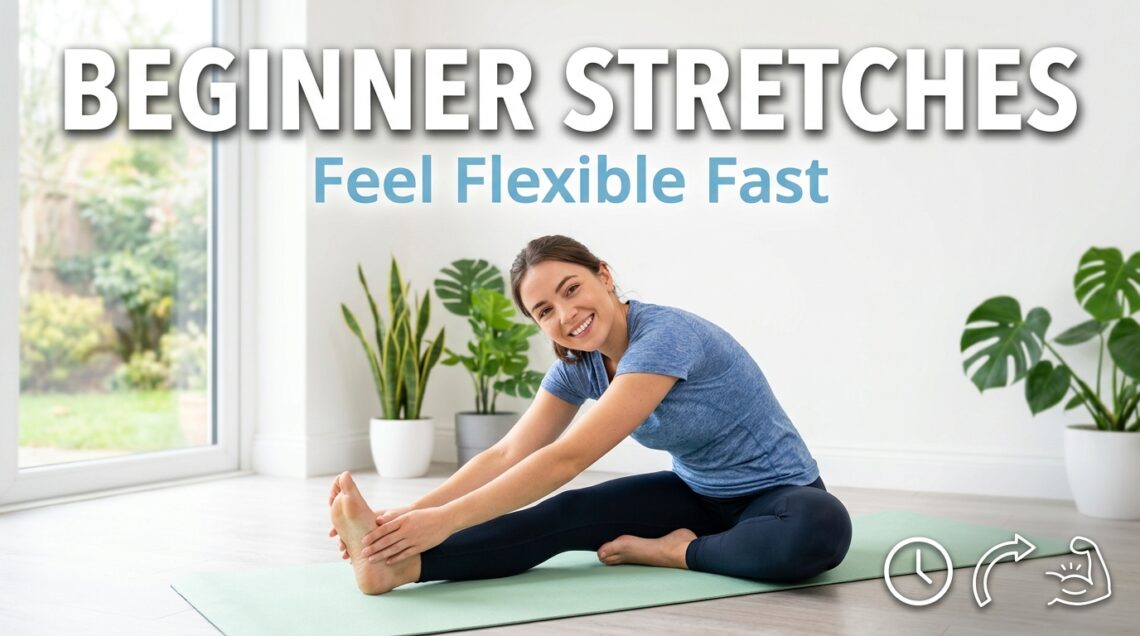
5. The Stretching of the Hamstring
The tight hamstrings are a common problem and are especially common among those who are sedentary.
How-to:
- You can sit on the floor, with one leg stretched out.
- Keep your back erect.
- Get your feet moving.
- 30 to 40 seconds of for 20-30 seconds.
- Change legs.
Benefits:
- Flexibility of the leg is increased
- Helps to improve lower back health
6. Quads Stretch
The stretch is centered on the upper thighs.
What to do:
- Get near to a wall for assistance.
- Knee bend.
- Put your ankles on your back.
- Make sure to gently pull it towards your.
- You should wait for 20 seconds.
- Repeat the exercise on the opposite leg.
Advantages:
- Improves leg flexibility
- Tightness is felt in the thigh.
7. Calf Stretch
The strain of standing and walking is tough on your muscles in the calf.
What to do:
- Place your hands against the wall.
- Step back.
- Make sure your heel is to the ground.
- Move a bit towards the forward.
- For 20 seconds, hold the button.
Benefits:
- The ankle becomes more flexible.
- Calf stiffness is reduced.
8. Child’s Pose
Yoga poses that are gentle to help a newbie.
What to do:
- Get down to the floor.
- Let your heels relax.
- Spread your arms wide towards the front.
- Lower your body towards the flooring.
- Stop for 30 minutes.
The benefits include:
- The body begins to unwind
- The back and shoulders are stretched.
Quick Daily Stretching Routine
The total time is 8-10 minutes.
Common Stretching Mistakes Beginners Make
The benefits of stretching can be usually stifled by easy errors made by beginners.
Over Stretched
There should be no the pain while stretching but just the feeling of comfort.
Breath Holding
Breathing can relax muscles.
Not Doing Warm-Ups
The muscles that are colder are more susceptible to injuries.
Inconsistencies
The simple act of stretching once per week will not provide you with long-lasting benefits.
Rushing Through the Moves
A slow and controlled stretch can allow you to go further.
How Often Should Beginners Stretch?
For beginners, it is recommended to aim for three times a week for stretch out for the best results. Better yet, try the gentle stretching that you do every day.
The majority of people are more relaxed and at ease after just a couple of weeks of regular exercise.
Flexibility builds up with time. Be aware of that. Your goal is not to get all-purposely flexible overnight, instead, to let your body’s flexibility to allow it to be easily throughout the day.
Final Thoughts
Beginning the practice of stretching doesn’t have to be a challenge. Simple and easy stretching exercises for beginners need nothing and can be performed practically anyplace. It doesn’t matter what, whether it’s for increasing flexibility, reducing stiffness, enhance posture, or to just be comfortable throughout the day stretching is among the most simple habits to establish.
The key is consistency. An hour of stretching every day helps keep your body in shape well-balanced, at ease and fit. Begin slowly, be attentive to your body and then make it a part of your regular routine. When you’re consistent you’ll see that your movement gets better, the pain lessens and you’ll feel more relaxed throughout your body.