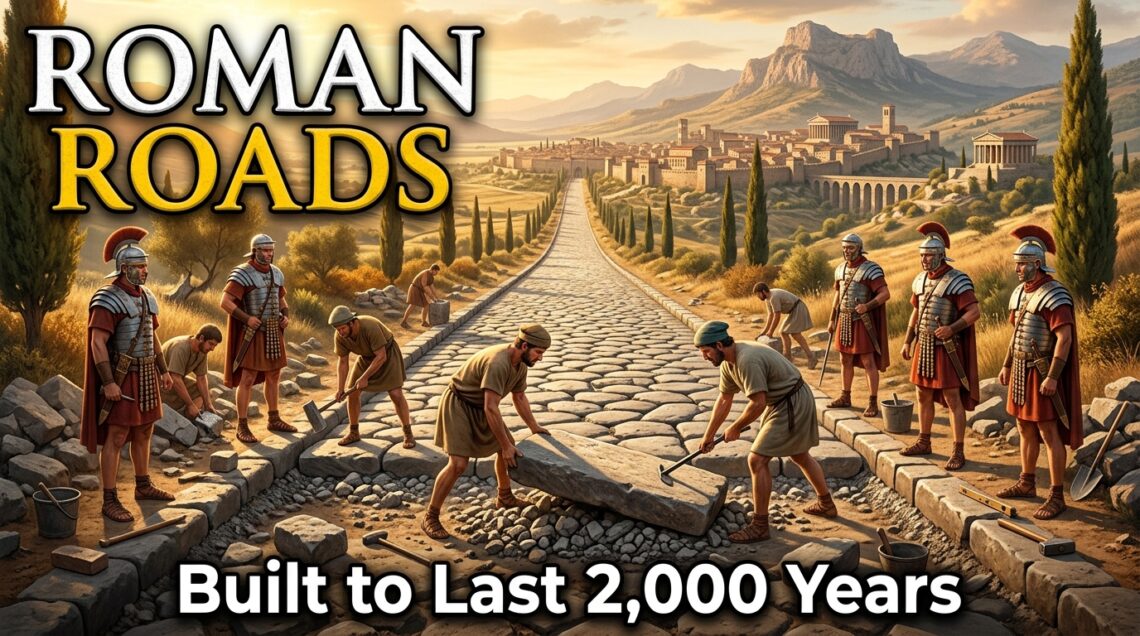
Ancient Romans: The assumption is that the modern road will require repair in a matter of a few years. Cracks, holes, and weather-related damage are all common difficulties. Yet, it is amazing to note that many Roman roads that were constructed more than 2 millennia ago remain in use and accessible in the present. It has awed the engineers, travelers and even historians from all over all over the world.
The Roman Empire is celebrated for many different things . One of the most significant achievements was its road network . It connected cities they helped commerce, facilitated troops to move faster and was a key factor for the growth in Roman power. Their endurance is remarkable. Modern roads need constant maintenance However, there are some Roman roads have survived the effects from centuries of heavy the elements like heat, rain or earthquakes as well as heavy usage.
How did the Romans create roads that would be able to last for a thousand years? We will reveal the incredible engineering secrets of one of the most impressive construction achievements.
The Significance of Roads in Ancient Rome
Ancient Romans: The Ancient Romans were aware that a reliable transport system was the key to the success of their empire. Roads helped in the swift transport of armies, shipping of merchandise by traders, and also the smooth communications of officials.
When the Roman Empire sprawled across Europe, North Africa and part of Asia roads became the arteries of civilization.
Many historians believe that the Romans built more than 400,000 km of roads. Around 80 kilometres laid with asphalt.
What is it that made Roman roads so special?
Ancient Romans: Contrary to the many civilisations of ancient times that have been uncovered, the Romans weren’t just able to cut an avenue and then travel along it. They also made plans for each of these roads prior to when they began building roads.
Roman engineers chose routes that were that were as straight as they could. They frequently constructed tunnels, bridges and raised paths over obstructions rather than traverse them so that they could maintain straight paths.
This method of planning resulted in the construction of roads that are more durable and efficient.
The layers of asphalt that created Roman roads last
Ancient Romans: The multi-layered design is a key contributor in the successful development of Roman road construction.
The Romans did not create a sole surface, instead they constructed their roads using layers of different materials, which combined to provide the strength and durability.
| Layer | Material Used | Role |
|---|---|---|
| Surface Layer | Large chunks of stone | that will last for a long time |
| Middle Layer | Gravel & Crushed Stone | More Power and Support |
| Stability of the Foundation Layer | drainage | |
| Earth Base | Compacted Earth | Sturdy Base |
Each layer was a reason. They built roads together that were able to handle traffic over a long period of time.
The Secret Was Great Drainage
Ancient Romans: Water is among the biggest enemies of roads. The majority of roads fail due to water leaking under the surface of the road, weakening the foundation.
This issue was easy to understand in the Romans.
The roads they constructed had an incline at the center, referred to as the crown. The crown design allowed rainwater to be directed to the sides rather than accumulating along the road.
Also, they dug drainage ditches on the edges to draw out the water.
Due to this ingenuous drainage method Roman roads remained stable when heavy rain fell.
The Difference Was Premium Materials
Ancient Romans: The Romans were extremely careful when picking out sturdy building materials.
The road’s surface was composed from large rocks along with a sub-base made consisting of gravel and crushed rock for support. Some regions of the world, Roman builders even used specific types of concrete for strength.
They didn’t choose most affordable materials available in the marketplace and instead chose to select durable in the long run.
That’s one reason that numerous Roman roads have been in operation for longer than originally expected to.
Roman Engineers of Talent
Ancient Romans: Roman engineers were among the greatest builders in the world of ancient times.
Surveyors made precise measurements of the terrain prior to building with sophisticated equipment. They used them to ensure roadways straight and precise.
Engineers have also considered aspects such as:
- Soil Conditions:
- The flow of water
- Altitude changes
- The need for traffic
Making sure to work on specifics prevented any future issues and added to longevity of roads.
Military Needs Spur Innovation Road Construction
Ancient Romans: Roman army was an important actor.
Armed forces that moved quickly needed reliable routes to reach remote locations quickly. This is why Roman commanders and their families spent a great deal of money on roads.
The majority of these roads were built initially to serve the military however, they later came into use in travel and commerce.
However, the roads were so that the quality of life was never compromised as the military’s success was contingent on them.
Regular Maintenance Made Roads Work
Ancient Romans: Another reason why the Roman roads were so durable was their routine maintenance.
The Romans were responsible for maintaining important roads by examining them and fixing broken sections as needed.
It was designed to stop tiny problems from growing into major problems.
Every road is prone to be damaged without regular maintenance and the Romans were aware of this .
Famous Roman Roads Still Existing Today
Appian Way (Via Appia)
Ancient Romans: A few of the more well-known Roman routes is the Appian Way that was built in the year 312 BC. Some sections of it remain in use and attract hundreds of tourists each year.
Via Augusta
The route was located in what is today Spain and was connected to crucial Roman settlements as well as trading centers.
Fosse Way
The route in Britain was first constructed during Roman times, and parts of it are still visible today.
These instances demonstrate the durability that is Roman engineering.
Lessons for Today’s Engineers
Technology has advanced such an incredible distance, however some experts are still looking at Roman methods of construction.
The most valuable lessons you can learn can be found in:
- Long-term reliability over quick-term savings
- Designing efficient drainage systems.
- Utilization of base layers that are strong
- A careful planning of routes prior to construction
- Routine maintenance of infrastructure
The principles can be applied to contemporary engineering projects across all over the world.
The Heritage of Roman Road Engineering
Ancient Romans: Roman roads revolutionized the face of the earth.
It facilitated trade, communication as well as military and cultural exchange across the entire empire. In addition, it demonstrated how it was possible to achieve this with carefully planned planning, skillful engineering, and high-quality construction.
Roman Engineers laid down the majority of the roads that today’s roads follow from centuries ago.
They are evident in the transport system in Europe as well as in other regions.
Conclusion
Ancient Romans: The history of old Roman roads serves as a strong reminding us that engineering excellence doesn’t revolve around speed and constructing that lasts. The Romans created roads that have stood the test of time for thousands of years with clever layout, top quality products, efficient drainage systems, sturdy foundations, and frequent maintenance. The roads they constructed was instrumental in uniting one of the biggest empires of all time and inspire engineers of today.
In spite of two thousand years in the past, the Roman roads are a testimony to the fact that buildings built with care and longer-term perspective can last for many generations. Their achievements are among the most impressive instances of engineering by humans the mankind has ever witnessed.