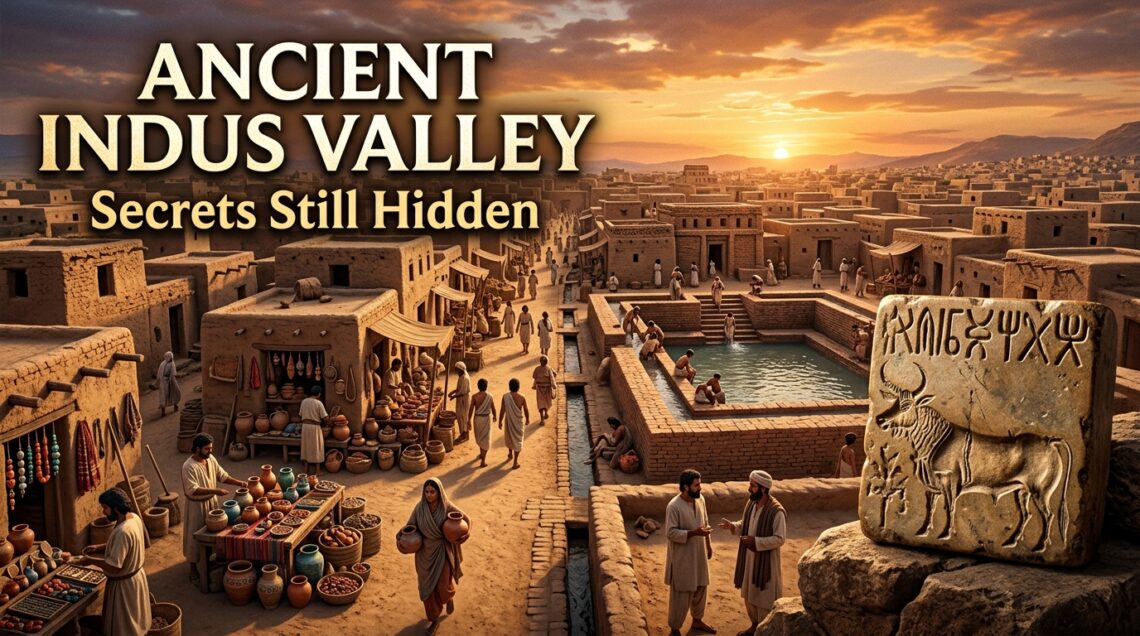
It is believed that the Indus Valley Civilization is among the oldest and most intriguing civilisations of human history. It was a thriving civilization that existed for thousands of years ago, and was located in the present-day Pakistan and northern India. Although it is more than 4,000 years old, this ancient civilization remains astonished archaeologists, historians, as well as researchers from all over the world.
What is it that makes what makes the Indus Valley Civilization unique is the advanced city-planning and impressive drainage systems and a well-organized way of living. In a time where most parts of the globe were still establishing simple settlements, people from Indus Valley Indus Valley were building meticulously planned cities and developing infrastructure that was far ahead of the times.
In this piece we’ll look into the secret secrets, achievements of the Indus Valley Civilization, its culture, and the mysteries of the ancient Indus Valley Civilization using a straightforward and simple languages.
What Was the Indus Valley Civilization?
The Indus Valley Civilization (IVC), also called also the Harappan Civilization, was a thriving civilisation between 3300 BCE to 1300 BCE. The most advanced phase of the IVC was between 2600 BCE to 1900 BCE.
The ancient civilization was first found in the 1920s after archaeologists found the old cities of Harappa and Mohenjo Daro.
It developed in its Indus the River and the surrounding regions that provided fertile soil to cultivate and accommodated massive numbers of people.
Major Cities of the Indus Valley Civilization
Numerous notable cities have been identified throughout the years.
These cities demonstrate that civilization spread over an extensive area, and that it maintained solid connections via commerce and communications.
Advanced City Planning
One of the most important factors to the enduring success in the Indus Valley Civilization was the excellent city design.
Streets were laid out in grid patterns which made transportation and mobility more convenient. Homes were constructed with standard bricks baked in the oven, proving the construction techniques followed standard guidelines.
Many cities were home to:
- Roads with wide shoulders
- Public wells
- Neighborhoods for residential use
- Marketplaces
- Storage Facilities
- Systems to drain water
This kind of plan was quite uncommon in the world of ancient times.
The World’s Earliest Drainage System
Perhaps the greatest accomplishment of the civilization was the sophisticated drainage system.
Nearly every home had the ability to connect drains to bigger underground channels. Water can be efficiently disposed of while ensuring cleanliness and health of the public.
Modern cities struggle to maintain sanitation. This makes the accomplishments of the Indus Valley residents all the more amazing.
This modernized infrastructure suggests society placed a lot of emphasis in the cleanliness of its inhabitants and their well-being.
Trade and Economic Growth
The Harappan Civilization had a population of Harappan Civilization were adept traders.
Archaeological evidence suggests the fact that they dealt with distant regions, which includes:
- Mesopotamia
- Persia
- Central Asia
- Gulf areas
The exchange included items such as:
- Textiles made of cotton
- Beads
- Jewelry
- Pottery
- Metals
The finding of seals as well as weights shows that the trade was well-organized and controlled.
The Mystery of the Indus Script
One of the biggest mystery surrounding civilizations is the system of writing.
Archaeologists have discovered thousands of seals that contain symbols and inscriptions called Indus Script. Indus Script.
However, despite numerous attempts, scientists haven’t yet been able to decode this code.
As the written language is unreadable Many details regarding the government of the civilisation, its religion as well as daily routines remain undiscovered.
This intriguing mystery continues to draw scientists from all over the world.
Religion and Beliefs
While there isn’t a complete knowledge of their faith archeological evidence offers indications.
Researchers have discovered:
- Small, small figurines thought to symbolize fertility goddesses
- Animal symbolism
- The sacred trees
- The figures of meditation
Certain historians think certain rituals may have had an impact on subsequent religious practices in South Asia.
But, since their language is not fully understood, a lot of concerns about their faith remain unanswered.
Daily Life in the Indus Valley
The inhabitants from the Indus Valley had an organized, productive life.
They took part in:
- Farming
- Craftsmanship
- Trade
- Construction
- Metalworking
Agriculturists grew crops, such as:
- Wheat
- Barley
- Peas
- Sesame
It is also evident that domesticated animals were used to breed sheep, cattle, and goats.
They wore ornaments made of precious metals, such as silver, gold as well as shells, which indicated an thriving economy as well as a vibrant artistic society.
Why Did the Civilization Decline?
One of the most unanswered issues is the reason why it was that the Indus Valley Civilization diminished.
A variety of theories have been proposed:
Climate Change
The weather’s patterns could reduce agricultural production.
River Shifts
Certain rivers altered their courses and water supply became less secure.
Natural Disasters
The earthquakes and floods could cause damage to cities.
Economic Changes
Trade routes might have weakened and impacted the economy.
Many experts believe that a mixture of these causes led to the slow fall of civilization more than just one event.
Why the Indus Valley Civilization Still Matters Today
The influence from Indus Valley Civilization Indus Valley Civilization is still relevant to this day.
Its accomplishments in the following areas:
- Urban planning
- Sanitation
- Engineering
- Trade
- Management of water
remain a source of inspiration for historians and city planners.
The civilisation demonstrates how well-organized societies can prosper through creativity as well as cooperation and management of their resources.
Researchers from the present are continuing to discover fresh discoveries to aid in understanding the fascinating the human story.
Interesting Facts About the Indus Valley Civilization
1. It Was One of the Largest Ancient Civilizations
The area covered by the civilization was more than one million square kilometers, which makes it among the biggest oldest societies on the planet.
2. Standardized Bricks Were Used Everywhere
The builders followed the standard measurements that showed strong planning and coordination.
3. Cotton Was Widely Used
Indus people Indus tribe was among the first known makers of cotton-based textiles.
4. No Massive Palaces Have Been Found
In contrast to many of the ancient civilizations, there are no evidences of palaces that were large in size.
5. The Writing System Remains a Mystery
Even after many decades of investigation even after decades of research Indus script hasn’t been entirely unraveled.
Conclusion
The ancient Indus Valley Civilization is one of the greatest achievements of the history of mankind. The advanced cities, the impressive drainage networks, organized trade routes, and advanced urban design show how advanced this civilization was many thousands years ago.
There are still many mysteries that remain unsolved, particularly regarding the writing system of its time and eventually decline. Unanswered questions continue drive archaeological research throughout the globe.
When new findings are discovered and we learn more about our understanding of the Indus Valley Civilization expands and reminds us that the earliest societies were often well-educated and had capabilities that are far more than think of. This legacy is a significant element of global history, and is still captivating many generations of scholars and historians.